Dear Donors
Karitas Relief Mission is supporting the Life-Saving Spinal Surgery project, an initiative aimed at helping a vulnerable individual living with a severe spinal injury receive the medical care needed to improve his condition and quality of life.
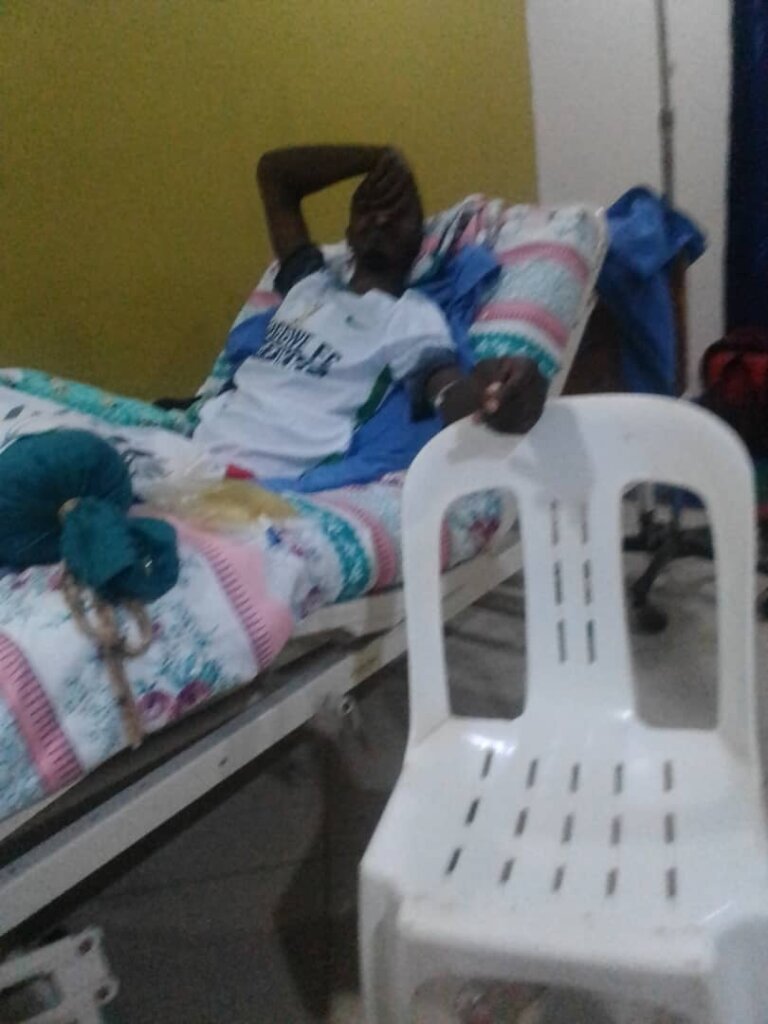
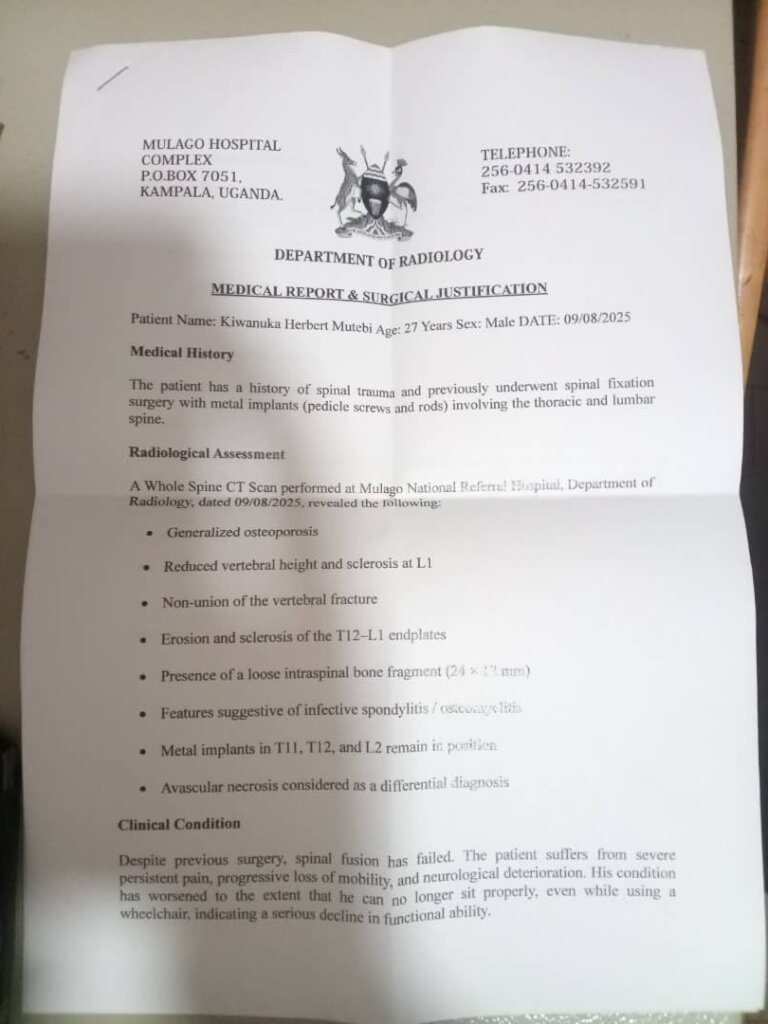
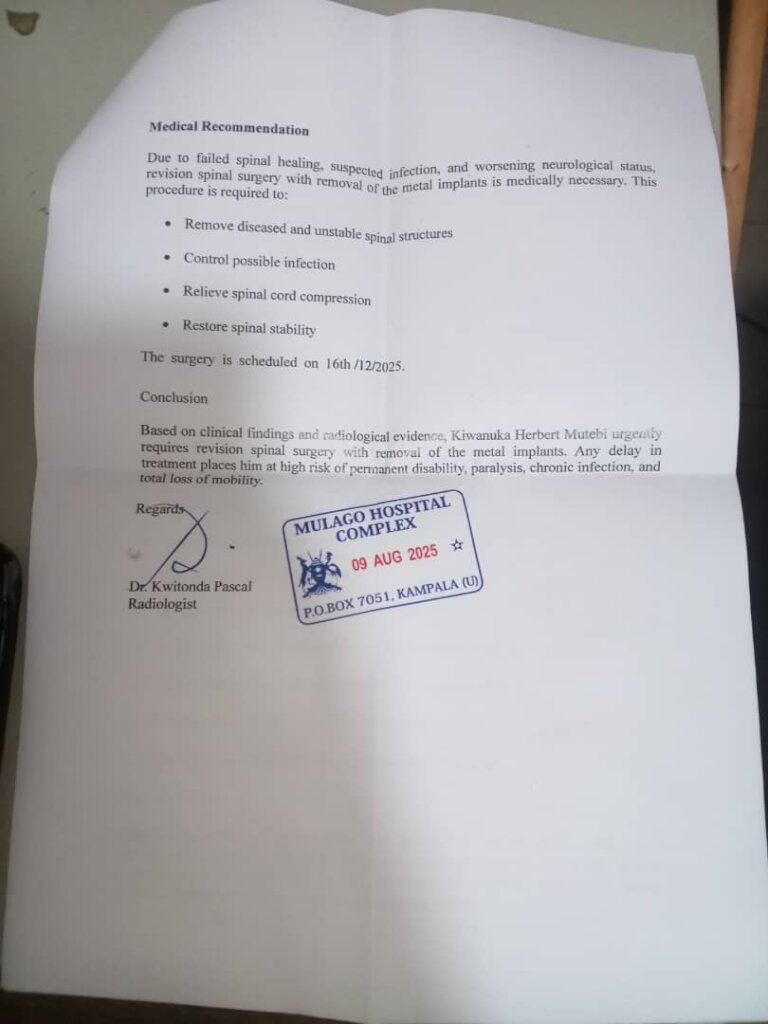
The beneficiary sustained a serious spinal injury in a quarry accident when a heavy stone fell on his back, damaging his spinal cord. He previously underwent surgery at Mulago National Referral Hospital, where metal implants were inserted to support his spine. However, his medical condition has continued to cause serious concern, and further specialized medical attention is needed.
The project seeks to mobilize support to help him access the necessary medical assessment, treatment, and spinal surgery.
2. Current Situation
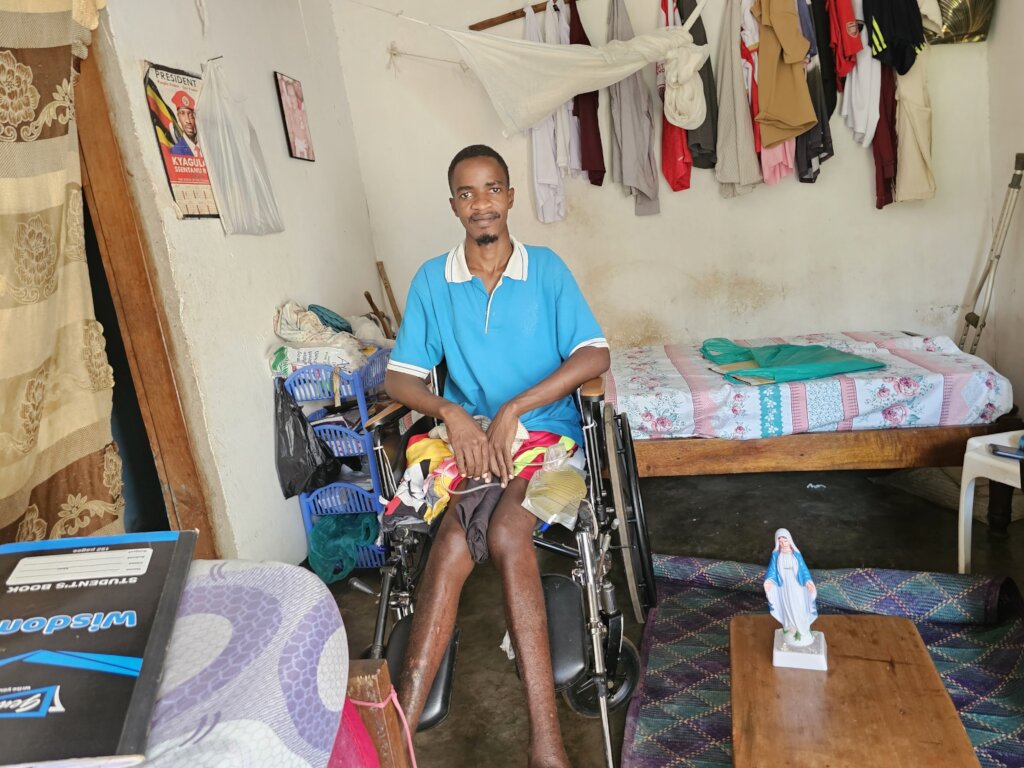
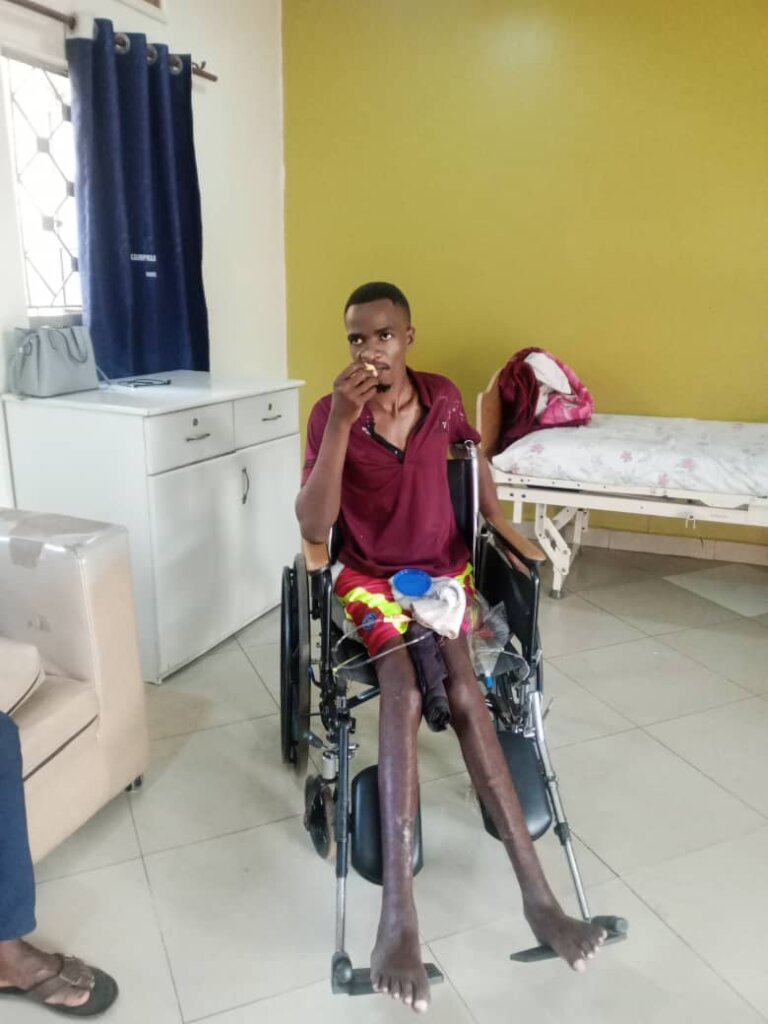
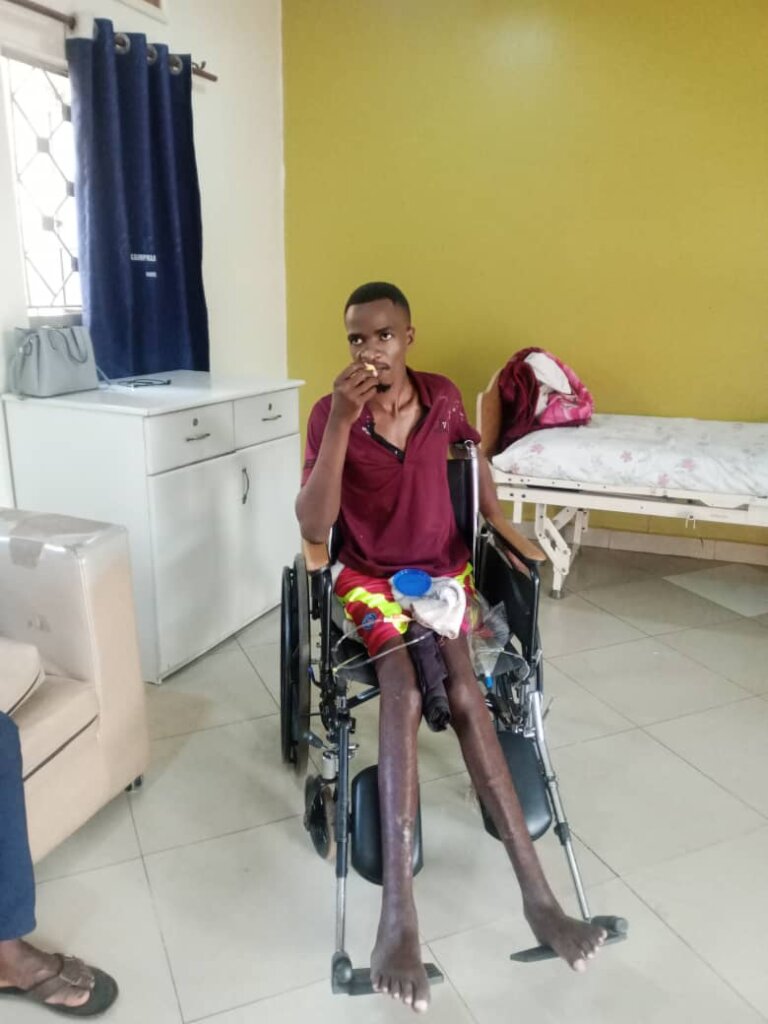
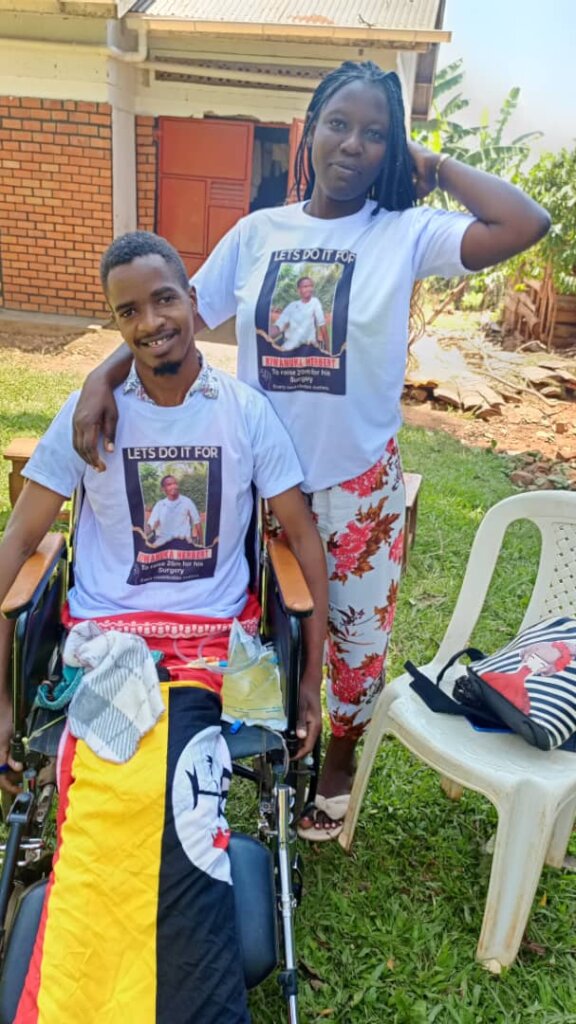
The beneficiary continues to experience severe complications associated with his spinal injury. His legs remain paralyzed, significantly limiting his mobility and ability to carry out daily activities independently.
His condition has also deteriorated, with concerning changes to the skin and tissue around his back. This has increased his worries about his health and future. His situation requires urgent medical assessment to determine the appropriate treatment and prevent further complications.
The inability to move independently has placed a considerable burden on his daily life. He needs continued medical attention, care, and support as he faces the physical and emotional challenges associated with his injury.
3. Project Activities and Progress
During the reporting period, Karitas Relief Mission has continued to focus on raising awareness of the beneficiary's medical needs and mobilizing support for his treatment.
The project involves the following key activities:
- Sharing information about the beneficiary's condition and medical needs.
- Mobilizing financial assistance to help him access specialized medical services.
- Seeking support from donors, charitable organizations, and well-wishers.
- Advocating for timely medical assessment and appropriate spinal treatment.
- Preparing project updates to communicate his situation and the continuing need for assistance.
Although efforts to mobilize support are ongoing, the required spinal surgery has not yet been completed. The beneficiary therefore continues to face the challenges associated with his condition while efforts to secure the necessary medical care continue.
4. Beneficiary Needs
The beneficiary requires comprehensive medical attention, including assessment by qualified specialists to determine the appropriate course of treatment.
The project's priority needs include:
1. Specialized medical consultations and investigations.
2. Assessment of the previous spinal implants and the condition of the injured area.
3. Appropriate surgical treatment as recommended by medical professionals.
4. Wound assessment and treatment of any associated complications.
5. Postoperative care, rehabilitation, and follow-up medical services where indicated.
6. Support for other essential medical and recovery-related needs.
The precise treatment required will depend on the findings and recommendations of the treating medical team.
5. Challenges
The project continues to face significant challenges, particularly the difficulty of securing sufficient financial support for specialized medical care.
Spinal injuries can require complex treatment, professional expertise, and extended follow-up care. Without timely access to appropriate medical services, the beneficiary remains vulnerable to further complications.
His persistent paralysis and the concerning deterioration around his back make timely medical evaluation especially important.
6. Expected Outcomes
Through successful mobilization of support and access to appropriate medical care, the project hopes to achieve the following outcomes:
- Improved access to specialized spinal treatment.
- Appropriate management of complications associated with the spinal injury.
- Reduced risk of further deterioration through timely medical intervention.
- Better management of pain and other symptoms, where present.
- Access to rehabilitation and continued medical follow-up.
- Improved quality of life and dignity for the beneficiary.
The possibility of neurological recovery, including improvement in leg movement, will depend on the severity of the spinal cord damage and the assessment of qualified specialists. Surgery cannot guarantee that paralysis will be reversed.
7. Lessons Learned
This project highlights the devastating and long-lasting effects that serious accidents can have on individuals and their families. A spinal injury can affect mobility, independence, emotional well-being, and the ability to participate in everyday activities.
The situation also demonstrates the importance of access to specialized medical services and timely intervention for people living with severe injuries.
Karitas Relief Mission recognizes that vulnerable individuals facing complex medical conditions often need support beyond their immediate communities. Partnerships with donors and humanitarian organizations can play an important role in helping such individuals access essential care.
8. Next Steps
Karitas Relief Mission intends to continue its efforts to support the beneficiary by:
- Mobilizing additional assistance for medical treatment.
- Seeking engagement with hospitals and qualified spinal specialists.
- Supporting timely medical evaluation of the deteriorating condition of his back.
- Following up on medical recommendations and the treatment plan.
- Providing updates to donors on confirmed developments and progress.
- Exploring opportunities for rehabilitation and longer-term support.
9. Conclusion and Appeal for Support
The Life-Saving Spinal Surgery project remains an urgent humanitarian concern. The beneficiary continues to live with paralysis following a severe spinal injury, and his condition has raised further concerns because of the deterioration around his back.
Despite the challenges, Karitas Relief Mission remains committed to seeking support that can help him access appropriate medical care and preserve his dignity.
We appeal to compassionate donors, charitable organizations, religious congregations, and well-wishers to stand with this vulnerable individual during this difficult period.
Your support can help bring him closer to the specialized medical attention he urgently needs and provide hope in a situation marked by pain, uncertainty, and limited independence.
Together, we can help a vulnerable person access essential medical care and face the future with renewed hope.
Prepared by:
Karitas Relief Mission
Uganda
![Share on Twitter]()
![Share on Facebook]()