By rafael moreno | director de programas
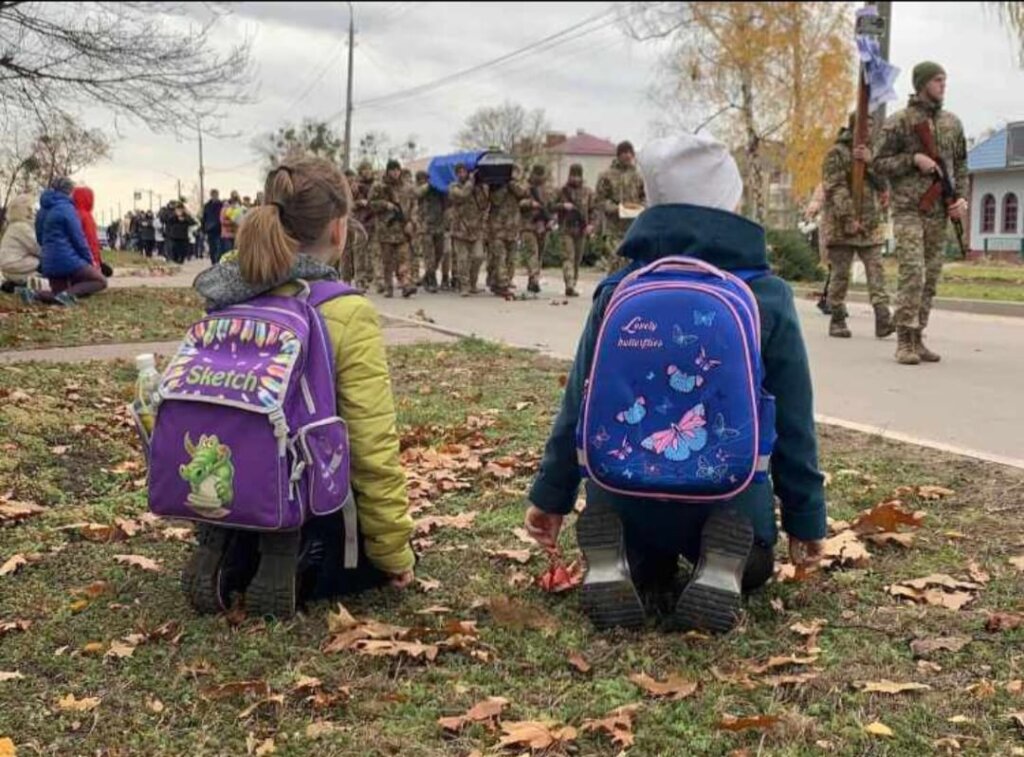
Vlad was walking home from school when he saw it. A drone, lying on the ground. It had not exploded.
Think about what a child feels at that moment. Fear, yes. But also something else, something very human: curiosity. A drone is not an everyday object. It is strange, it is right there, and you want to see it up close.
Vlad took a step towards it.
Behind him, the other children started shouting. Don’t go near it! They shouted all at once, and they meant it. And Vlad remembered. Something he had heard in class, in a session with our volunteers. He stopped. He stepped back. He called the military, and they came and detonated the drone safely.
Nobody was hurt. A child walked home.
That is the whole story. It is small, and it is everything we do this for.
Why a boy like Vlad matters
More than 500,000 children in Ukraine go to schools located in areas contaminated with mines and unexploded ordnance. Here is the number that keeps us awake: 65% of child victims touch or step on an explosive device without realising it is dangerous. They are not careless. Nobody ever showed them.
Vlad had been shown. And so had the friends who shouted. That is what changes the ending: it was not one child who knew what to do. It was a whole group.
What we have done
This year, with the help of Ukrainian volunteers, we worked in 4 more schools, bringing our total to 9 schools. In all of them, we have reached 2,000 children.
We don’t teach with long lectures. A child who has lived through years of sirens does not learn by sitting still and listening. So we use theatre. We act out the situation together. The children take part, they get it wrong, they try again. They remember it, because they lived it with their own bodies.
We also brought 5 virtual reality glasses. Only five. But each pair lets a child walk through a contaminated field and decide what to do, with no real danger. Every pair goes from classroom to classroom, and the queue to try them is always long.
Studies show that children who learn through games and simulations spot 90% more warning signs than those who only attend theory classes.
The people who make it possible
Our volunteers are Ukrainian. They know these villages, they speak the children’s language, and they live under the same sky. When one of them says “don’t touch it, step back, tell an adult”, the children believe it, because it comes from someone who walks the same roads.
And there is something else that happens in those sessions. When twenty children act out a scene together, you learn who stays silent, who hangs back, who looks frightened at the mention of a loud noise. We go to teach safety. Often, it is also the first time an adult has noticed those children.
What comes next
Two thousand children is a lot. It is also a small part of 500,000.
We want to return to the schools we have already visited, so the lesson doesn’t fade. We want to reach new ones. And we want more glasses than five. Because the more children practise the right reaction, the more Vlads there will be.
When a child learns this, the lesson doesn’t stay in the classroom. It goes home, to the kitchen table, to the street, to the friends who shout don’t go near it.
Thank you for helping us get there.
— Thank you.
Project reports on GlobalGiving are posted directly to globalgiving.org by Project Leaders as they are completed, generally every 3-4 months. To protect the integrity of these documents, GlobalGiving does not alter them; therefore you may find some language or formatting issues.
If you donate to this project or have donated to this project, you can receive an email when this project posts a report. You can also subscribe for reports without donating.



Support this important cause by creating a personalized fundraising page.
Start a Fundraiser