By Kajubi Jimmy | Project Leader
Dear Donors
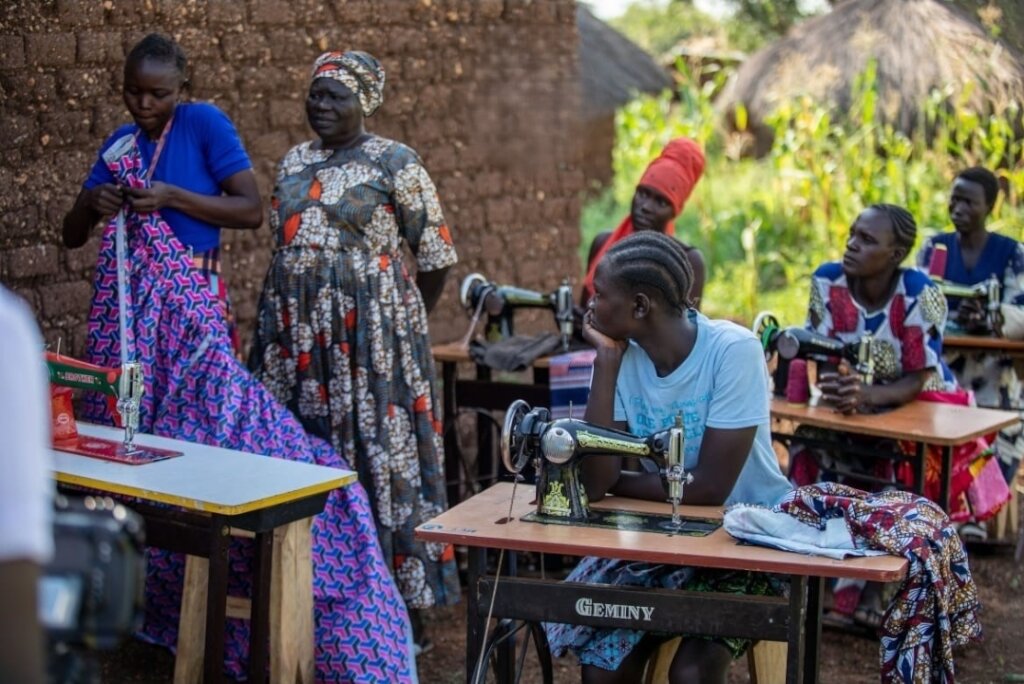
Karitas Relief Mission continues its commitment to empowering vulnerable girls and young women through vocational training in tailoring and garment making. The Empowering Girls with Sewing Machines project aims to equip beneficiaries with practical skills that will enable them to become self-reliant, earn an income, and improve the living conditions of their families.
Many of the girls we serve come from financially disadvantaged backgrounds. Some are young mothers and single mothers who struggle to provide basic necessities for themselves and their children. Despite these challenges, they have demonstrated determination and a strong desire to acquire vocational skills that can help them build a better future.
2. Recent Activities and Engagement with the Girls
During our recent engagements, we continued meeting with girls who have expressed interest in joining the sewing and vocational training initiative. These meetings provided an opportunity to understand their needs, listen to their personal experiences, and discuss how the program can help them overcome economic hardship.
The girls expressed great enthusiasm for learning tailoring. Many explained that gaining a practical skill would give them an opportunity to earn a living instead of depending entirely on relatives, well-wishers, or other people for support.
We also discussed the importance of commitment, discipline, regular attendance, and patience throughout the training period. The girls were encouraged to remain focused on their goals and to see vocational education as an important step toward a more secure future.
Following our discussions and assessment of the interested participants, we are preparing to organize the next group of trainees to begin their vocational studies in January 2027, during the first school term.
3. Needs and Challenges Facing the Girls
Although the girls are eager to participate, financial limitations remain a major obstacle. Many cannot afford vocational training fees, learning materials, transport, or other basic requirements.
Young mothers face additional difficulties because they must balance childcare and household responsibilities with their desire to study and become economically independent.
Without appropriate support, these girls risk remaining trapped in poverty and financial dependence. Providing them with access to vocational training will give them a practical opportunity to develop their abilities and pursue sustainable livelihoods.
4. Project Objectives
The project aims to:
1. Provide vocational sewing and tailoring training to 156 vulnerable girls and young women.
2. Support girls from disadvantaged backgrounds, including young and single mothers, to acquire employable skills.
3. Provide sewing machines and essential training materials to facilitate practical learning.
4. Help graduates establish small tailoring businesses or seek employment in the garment-making sector.
5. Promote financial independence, self-confidence, and improved family welfare.
6. Reduce economic vulnerability by creating opportunities for sustainable income generation.
5. Progress and Achievements
The project has made progress in mobilizing interested girls and engaging them in discussions about vocational training. Our meetings have helped us understand the participants' expectations, challenges, and commitment to learning.
The girls have shown encouraging enthusiasm and a willingness to participate in the program. Their determination strengthens our belief that this initiative can create meaningful opportunities when adequate resources become available.
We are also planning the next phase of implementation, with the aim of enrolling the next group of trainees in January 2027.
At this stage, our priority is to secure sufficient funding, sewing machines, training materials, and other essential resources to make the planned training possible. We will document enrolment, attendance, training completion, and livelihood outcomes as implementation progresses.
6. Our Plan for the Coming Months
Karitas Relief Mission intends to undertake the following activities:
Preparation and enrolment: Finalize the selection and registration of eligible girls, prioritizing those facing significant economic challenges.
Training arrangements: Identify or confirm suitable vocational training arrangements and qualified tailoring instructors.
Provision of sewing machines: Mobilize resources to acquire additional sewing machines and ensure that the trainees have adequate opportunities for practical learning.
Training materials: Obtain fabric, thread, needles, scissors, measuring tapes, and other essential supplies.
Commencement of training: Prepare the next group to begin vocational studies in January 2027, subject to the availability of funding and training resources.
Practical skills development: Support trainees to learn measuring, cutting, stitching, garment construction, finishing, and basic business management.
Income-generation support: Explore opportunities for graduates to access sewing machines, start small tailoring businesses, form cooperative groups, or seek employment.
Monitoring and evaluation: Track enrolment, attendance, skills development, graduation, and progress toward income generation.
7. Expected Results
Through this initiative, we hope to achieve the following results:
- 156 girls and young women receive access to vocational sewing and tailoring training.
- Beneficiaries develop practical skills that can support future employment and self-employment.
- Young mothers gain greater opportunities to provide for their children.
- Graduates become better equipped to start small businesses and contribute to household income.
- Vulnerable girls gain confidence, dignity, and hope for a more independent future.
These are project targets and expected outcomes; actual achievements will be reported as implementation and monitoring proceed.
8. The Importance of Donor Support
We sincerely appeal to our donors, partners, and well-wishers to support this initiative. Every contribution can help remove a barrier that prevents a vulnerable girl from accessing vocational education.
Support is needed for sewing machines, training fees, materials, instructors, and other essential program costs. By investing in these girls, donors will help provide more than vocational education: they will help create opportunities for independence, dignity, and a more secure future.
We believe that a girl who acquires a practical skill has a stronger opportunity to support herself, care for her family, and contribute positively to her community.
9. Conclusion
The Empowering Girls with Sewing Machines project remains an important initiative in our mission to support vulnerable girls and young women in Uganda. Our recent meetings have revealed a strong desire among the girls to learn, overcome hardship, and establish better lives for themselves and their families.
As we prepare for the planned January 2027 training intake, we remain committed to mobilizing the resources needed to turn their hopes into practical opportunities.
We thank all our donors and partners for standing with vulnerable girls. With continued support, we can help these young women transform their determination into skills, their skills into livelihoods, and their livelihoods into lasting change for their families and communities.
Prepared by:
Karitas Relief Mission
Uganda
Empowering girls with skills today, building independent families and stronger communities tomorrow.
Project reports on GlobalGiving are posted directly to globalgiving.org by Project Leaders as they are completed, generally every 3-4 months. To protect the integrity of these documents, GlobalGiving does not alter them; therefore you may find some language or formatting issues.
If you donate to this project or have donated to this project, you can receive an email when this project posts a report. You can also subscribe for reports without donating.



Support this important cause by creating a personalized fundraising page.
Start a Fundraiser