By Kajubi Jimmy | Project Leader
Dear Donors
1. Executive Summary
The Empowering Girls with Sewing Machines Project is an initiative designed to equip vulnerable girls, particularly young single mothers, with practical tailoring skills that will help them become self-reliant, earn an income, and build a better future for themselves and their children.
Many of the girls enrolled in this vocational training programme face significant hardships. Some are young single mothers who must struggle to provide food, clothing, medical care, and other basic necessities for their children while pursuing their studies. Despite these challenges, they have demonstrated remarkable determination, courage, and commitment to learning.
Through this project, Karitas Relief Mission seeks to provide these girls with opportunities to acquire practical skills that can enable them to establish small tailoring businesses after completing their vocational studies. The project recognizes that education and vocational training are important pathways out of poverty, especially for vulnerable girls who have limited opportunities for employment.
The project aims to reach 156 girls, helping them gain the skills, confidence, and practical experience needed to become economically independent and contribute positively to their families and communities.
2. Background and Problem Statement
Many vulnerable girls in our communities face difficulties accessing vocational education and opportunities for economic empowerment. For girls who have become mothers at a young age, the challenges are even greater. They must balance their education with the responsibility of caring for their children, often without reliable financial support.
Some struggle to meet their daily needs, including food, transport, clothing, childcare, and essential learning materials. These circumstances can make it difficult for them to continue their studies and prepare for independent living.
Without practical skills or reliable sources of income, many young mothers risk remaining trapped in poverty and dependence. They may have few opportunities to support their children or improve their living conditions.
The Empowering Girls with Sewing Machines Project responds to these challenges by providing vocational training in tailoring and encouraging girls to develop skills that can create opportunities for employment and self-employment.
3. Project Objectives
The main objective is to empower vulnerable girls, especially young single mothers, through vocational training in tailoring and sewing.
The specific objectives are to:
1. Equip 156 girls with practical sewing and tailoring skills.
2. Support young single mothers to acquire skills that can help them earn a living after completing their vocational studies.
3. Promote self-reliance, dignity, and economic independence among vulnerable girls.
4. Reduce dependence on relatives, well-wishers, and other sources of financial assistance.
5. Help girls develop the confidence to start small tailoring businesses or seek employment in established tailoring workshops.
6. Create opportunities for the girls to support their children and improve their families' living conditions.
4. Activities Implemented
The project focuses on practical vocational training to help girls develop skills that can be applied in everyday life and in future income-generating activities.
Key activities include:
- Providing practical instruction in sewing and tailoring.
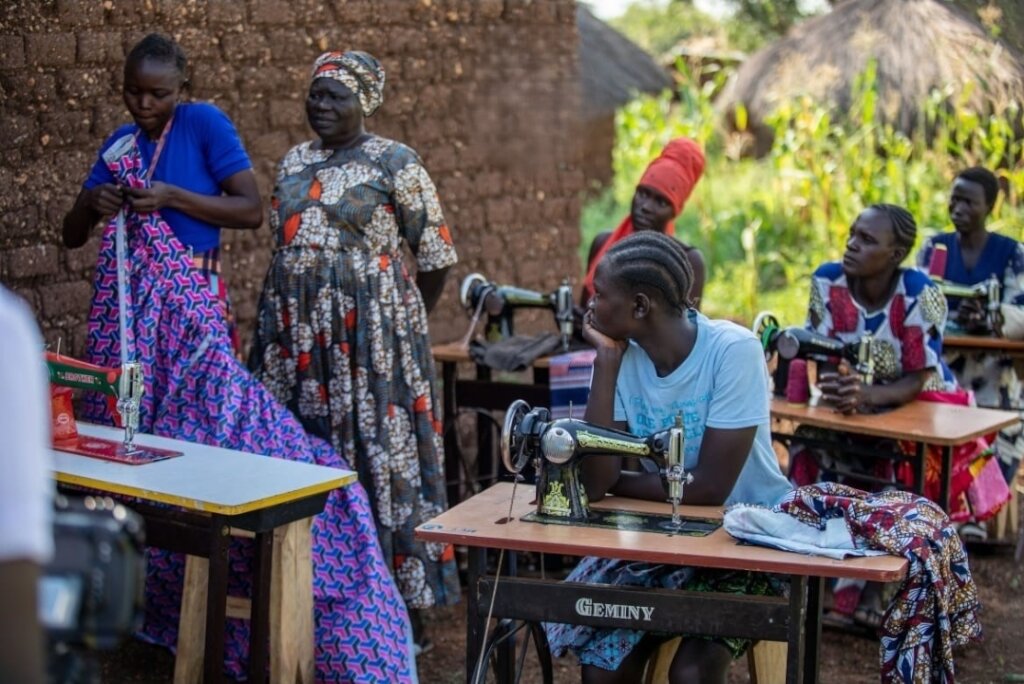
- Teaching girls how to operate sewing machines safely and correctly.
- Training them in measuring, cutting, stitching, and finishing garments.
- Encouraging regular practice to improve their accuracy, creativity, and confidence.
- Supporting girls to understand how tailoring skills can be transformed into a source of income.
- Encouraging perseverance, teamwork, and mutual support among the trainees.
The availability of sewing machines is essential because tailoring is a practical skill that requires repeated hands-on experience. With adequate equipment, the girls can practise more frequently, improve their work, and prepare for the demands of the tailoring market.
5. Determination and Commitment of the Girls
One of the most encouraging aspects of this project is the determination demonstrated by the girls. Despite the difficulties they experience in their personal lives, they remain eager to learn and committed to acquiring skills that can change their future.
For some of these girls, vocational training represents more than an opportunity to study. It represents hope for a new beginning. They understand that acquiring a practical skill can help them become independent, provide for their children, and build a life based on their own efforts.
The young single mothers face a particularly difficult situation. They must think about their children's welfare while also finding time and energy to attend training, practise their skills, and prepare for their future. Some face financial pressures that make it difficult to meet their daily needs, yet they continue striving to complete their studies.
Their determination shows that they are not giving up on themselves or their children. They want to move beyond the hardships they have experienced and establish a more secure future.
The girls are motivated by the hope that, after completing their vocational studies, they will be able to sew clothes for customers, earn money, save towards purchasing their own sewing machines, and eventually establish small businesses.
Their commitment deserves encouragement and practical support. They have the willingness to learn and the desire to improve their circumstances, but they need adequate equipment and opportunities to turn their determination into lasting economic independence.
6. Challenges Facing the Girls
Despite their enthusiasm, the girls face several challenges that may affect their training and future progress.
Financial hardship: Some girls struggle to meet basic needs while attending their vocational studies. Their limited financial resources make it difficult to concentrate fully on learning.
Responsibilities of single motherhood: The young mothers carry the responsibility of caring for their children while trying to prepare for a better future. Childcare, feeding, and other family responsibilities can place considerable pressure on them.
Limited access to sewing machines: Practical training requires sufficient sewing machines. When equipment is inadequate, opportunities for regular practice may be restricted, slowing the development of essential skills.
Uncertainty about future employment: Even after completing their training, the girls may struggle to find employment or establish businesses because they lack capital, equipment, and access to customers.
Emotional and social pressure: Balancing motherhood, vocational studies, and financial difficulties can be emotionally demanding. The girls need encouragement and a supportive learning environment to remain motivated.
These challenges demonstrate why vocational training must be accompanied by access to equipment, practical experience, and opportunities for income generation.
7. Expected Outcomes and Impact
The project is intended to produce meaningful and sustainable improvements in the lives of the girls.
The expected outcomes include:
- Improved vocational skills: The girls will gain practical knowledge and experience in sewing and tailoring.
- Greater confidence: They will become more confident in their ability to earn an income and make decisions about their future.
- Economic independence: Graduates will have a practical skill they can use to seek employment or establish small tailoring businesses.
- Improved family welfare: Girls who begin earning an income will have greater opportunities to provide food, clothing, education, and other necessities for their children.
- Reduced vulnerability: Access to a marketable skill can reduce dependence on others and improve the girls' ability to cope with financial difficulties.
- Long-term community benefits: Skilled graduates may eventually employ others, serve local customers, and inspire other vulnerable girls to pursue vocational education.
These outcomes will depend on continued training, sufficient sewing equipment, access to customers, and opportunities to obtain the tools needed to begin working independently.
8. Monitoring and Evaluation
Karitas Relief Mission will monitor the progress of the project by assessing the girls' participation, practical skills, training completion, and readiness to earn an income.
Monitoring will help identify areas where the girls need additional support and establish whether the training is contributing to improved livelihoods.
9. Sustainability Plan
The long-term success of this project depends on helping the girls move from training to income generation.
After completing their vocational studies, the girls will be encouraged to begin with small tailoring activities and gradually expand as their skills and financial resources improve. They may start by repairing clothes, making simple garments, sewing school uniforms, or accepting orders from members of their communities.
The project will also encourage the girls to save a portion of any income they earn towards purchasing sewing machines, materials, and other essential equipment.
Where possible, continued mentorship, business skills training, and links to potential customers will help the graduates establish sustainable livelihoods.
Providing additional sewing machines and ensuring adequate access to practical training will strengthen the project's ability to prepare more girls for independent living.
10. Conclusion and Appeal for Continued Support
The Empowering Girls with Sewing Machines Project is an investment in the dignity, skills, and future of vulnerable girls. For young single mothers, the opportunity to learn tailoring is particularly important because it offers a practical way to work towards financial independence while caring for their children.
The girls have demonstrated a strong desire to learn, overcome hardship, and build better lives. They are not simply seeking assistance; they are seeking an opportunity to develop skills and use their own efforts to support their families.
However, determination alone cannot overcome every barrier. The girls need access to sufficient sewing machines, continued practical training, and support that will help them transition from vocational studies into employment or self-employment.
Karitas Relief Mission therefore appeals to its partners, donors, and well-wishers to continue supporting this initiative. Every sewing machine provided creates another opportunity for a girl to practise, improve her skills, and move closer to earning a living.
By supporting these girls today, we can help them build a future in which they are better equipped to provide for their children, live with dignity, and contribute to their communities.
Our vision is to see every girl complete her vocational studies with practical skills, confidence, and a realistic opportunity to earn a living. With continued support, their determination can become the foundation for lasting change.
Prepared by Karitas Relief Mission
Empowering Girls. Building Skills. Creating Sustainable Livelihoods.
Project reports on GlobalGiving are posted directly to globalgiving.org by Project Leaders as they are completed, generally every 3-4 months. To protect the integrity of these documents, GlobalGiving does not alter them; therefore you may find some language or formatting issues.
If you donate to this project or have donated to this project, you can receive an email when this project posts a report. You can also subscribe for reports without donating.



Support this important cause by creating a personalized fundraising page.
Start a Fundraiser